
Project Snapshot
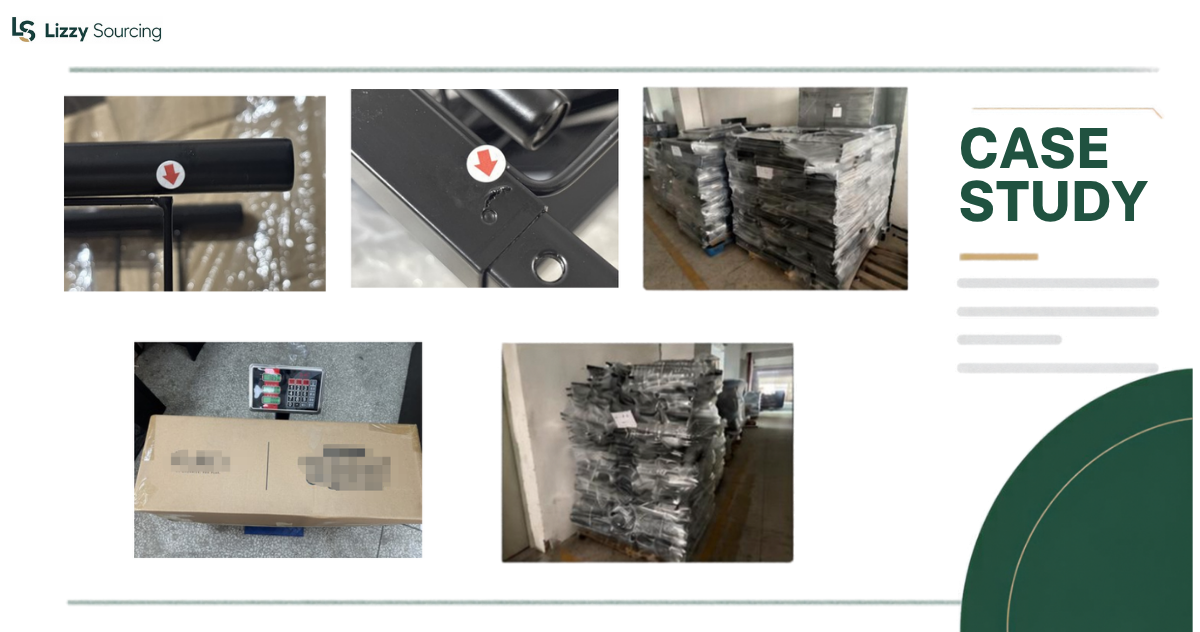
A customer ordered a multi-part metal product with several main components, fittings, and small hardware packed into each set. As part of our pre-shipment QC, we helped confirm that each packed set was complete before the goods left the factory.
The Challenge
For multi-part products, appearance inspection alone is not enough.
The main frames may look correct, the finish may appear acceptable, and the cartons may look intact. But a missing fitting or small accessory can still create a serious problem for the customer during installation or final use.
At the same time, repeatedly opening and repacking heavy cartons can create avoidable risks, including surface scratches, damaged packaging, and misplaced components.
The challenge was to use a control method that was practical, targeted, and suitable for the product.
Our Pre-Shipment QC Approach
As part of the pre-shipment QC process, we asked the factory to complete a structured internal recheck covering:
- Main components and connection points
- Surface condition and visible damage
- Accessories and small hardware
- Packaging condition and carton readiness
We also added a simple secondary control: weight verification.
Because the finished sets should be close in weight when all components are included, an unusual difference can indicate that a packed set needs further review.
During the final check, one packed set showed a small but noticeable weight difference.
It looked normal from the outside, but the difference was enough to justify reopening it.
A small hardware component was missing and was added before shipment.
Why Weight Verification Helped
Weight verification does not replace visual inspection or component checking.
Instead, it gives us another way to spot a packed set that may need a closer look.
For products with multiple fittings, screws, accessories, or other small components, a weight difference can reveal inconsistencies that are difficult to see once everything has been packed.
In this case, the weight check gave us a reason to reopen one set and inspect it again.
The Outcome
The issue was identified and corrected before the shipment left the factory.
The missing component was identified and corrected before shipment, reducing the risk of an incomplete set reaching the customer.
More importantly, the project confirmed a useful QC approach for similar multi-part products: combine visual inspection, component confirmation, and a practical secondary check that matches the likely risk.
What This Shows
Good QC is not simply about adding more inspection steps.
It is about choosing the right control method for the type of failure most likely to occur.
For multi-part products, visual inspection, component checking, and weight verification can work together to provide better control than visual inspection alone.
Need support with pre-shipment QC for multi-part products sourced from China? Contact Lizzy Sourcing to discuss your project.